
First College Sports Commission Arbitration Upholds Rejections of NIL Deals
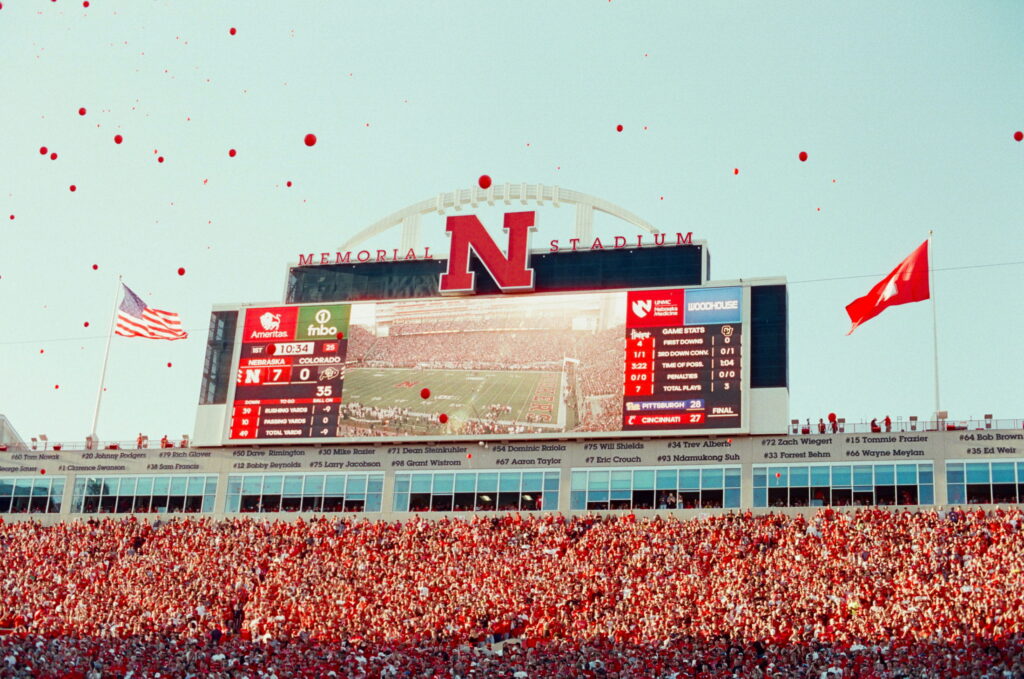
On May 11, 2026, a neutral arbitrator upheld the College Sports Commission’s (CSC) rejection of NIL deals involving 18 University of Nebraska football players. The decision marks the first CSC arbitration under the House v. NCAA settlement framework, and an important victory for the CSC and its enforcement authority.
The Nebraska football players entered NIL deals with Playfly Sports Properties, LLC, a marketing firm that has a long-term multimedia rights agreement with the University. As part of that relationship, Playfly also agreed to contribute funding for NIL opportunities for Nebraska student-athletes.
After reviewing the deals, the CSC determined that Playfly qualified as an associated entity and thus subjected the agreements to heightened scrutiny under NCAA Rules 22.1.3 (the valid business purpose rule) and 22.1.3.3 (the warehousing rule). It ultimately concluded that the deals violated those rules and rejected them. The Nebraska football players subsequently challenged that decision through arbitration.
The arbitrator first addressed, as a threshold issue, whether Playfly qualified as an associated entity under the House settlement. The settlement defines an associated entity as “a third party affiliated with a university that exists primarily to promote that university’s sports or to create NIL opportunities.”
In reaching his decision, the arbitrator noted that Nebraska itself had identified Playfly as an associated entity in April 2025. He also emphasized the close financial relationship between Playfly and the University, finding that “in effect, Playfly functions as a pass-through for University payments to its student athletes in a way that was designed to bypass the [revenue sharing] cap.” The arbitrator further concluded that Playfly’s contractual obligations to Nebraska reflected such a close alignment of interests that it was difficult to distinguish where Playfly’s interests ended and Nebraska’s began.
Ultimately, the arbitrator held that Playfly was an associated entity not simply because it provided NIL opportunities, but because it was funding those opportunities with proceeds tied to Nebraska’s multimedia rights agreement. Having determined that Playfly was an associated entity, the arbitrator next considered whether the NIL deals served a valid business purpose and complied with the warehousing rule.
The arbitrator concluded that the deals lacked a valid business purpose because Playfly was not offering goods or services to the general public and could not identify any actual third-party sponsor offering such to the general public that actually would purchase the NIL rights Playfly sought to acquire as inventory for future sale.
The arbitrator also found that the deals violated the warehousing rule. That rule is designed to prevent entities from stockpiling NIL rights without putting them to immediate commercial use. According to the decision, Playfly structured the agreements so it could hold the football players’ NIL rights for potential future use and, at some point, potentially sell those rights to third-party sponsors.
The arbitrator noted that such an arrangement could produce dramatically different outcomes for Playfly depending on a player’s future success. If a player became highly successful and marketable, Playfly could benefit substantially. If a player failed to generate significant commercial value, Playfly could suffer a corresponding loss.
Based on those findings, the arbitrator concluded that the CSC correctly determined that Playfly was an associated entity and that the NIL deals both lacked a valid business purpose and violated the warehousing rule. As a result, the CSC properly rejected the agreements.
While the decision represents an important victory for the CSC, it is unlikely to be the final word on the issue. Questions involving whether multimedia rights companies like Playfly are actually associated entities are already emerging in litigation connected to the House settlement. Nebraska Attorney General Mike Hilgers has also indicated that his office intends to pursue litigation under a state law that prohibits associations from penalizing athletes for participating in NIL activities.
What is clear, however, is that this first arbitration provides an early roadmap for how CSC enforcement actions may be evaluated going forward. Schools, athletes, collectives, multimedia rights companies and other stakeholders will be watching closely as additional disputes move through the House settlement’s arbitration process.
The next article in this series will provide an overview of the House arbitration provisions and what participating parties should know and expect when navigating that framework.
As a firm with extensive experience representing both public and private entities located in the same city as one of America’s largest universities, Isaac Wiles is uniquely positioned to advise clients on this dynamic area of the law. For more information, contact me at afraser@isaacwiles.com.